Why Does My Cat Bite? Understanding Play, Fear, and “Please Stop” Signals

Your cat is enjoying a gentle stroke when it suddenly turns and bites your hand. Another day, it hides behind a chair and pounces on your ankles. These moments can feel confusing, especially when your cat is otherwise affectionate.
Biting can occur during play, fear, unwanted handling, or pain. Understanding what happens before a bite—and noticing your cat’s body language—can help you respond appropriately and build more comfortable interactions.
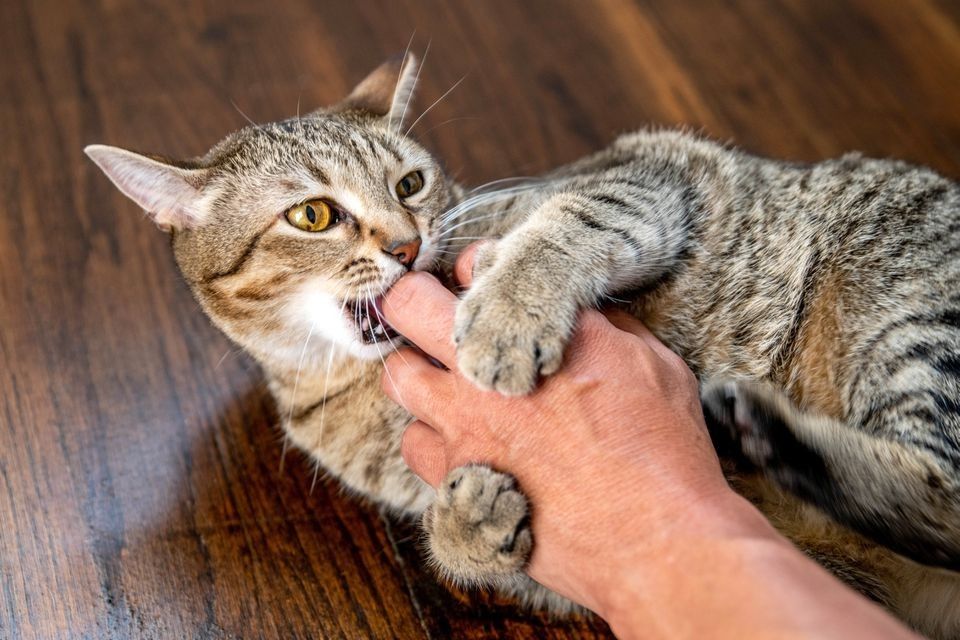
1. Look at the Situation Before Labeling the Behavior
A bite describes an action, not its cause. Similar-looking bites can happen for different reasons, so calling a cat “naughty” or “aggressive” does little to explain what it needs.
Consider what happened immediately beforehand. Were your feet moving under a blanket? Had you been stroking the cat for several minutes? Was someone blocking its escape route?
Look at the whole sequence: the setting, your actions, the cat’s posture, and what happened afterward. These details are more useful than judging the bite alone.
2. Play Biting: When Hands and Feet Become Targets
Stalking, chasing, grabbing, and biting are parts of a cat’s hunting behavior that can appear during play. A moving hand or ankle may become an attractive target, especially if the cat has learned that people’s fingers are toys.
Play-related biting is common in kittens and young cats, although adults can also show it. It may occur during bursts of activity or when suitable play opportunities are limited.
Use wand toys, balls, and appropriate kicker toys to keep play directed away from your body. Schedule regular play before predictable ankle-pouncing periods rather than waiting for biting to begin. Supervise string toys and store them safely afterward.
3. Fear Biting: When a Cat Feels Unable to Escape
A frightened cat may try to retreat, hide, or create distance. If escape is blocked, it may bite defensively.
Possible signals include a lowered or tense posture, ears turned back or flattened, an arched back, hissing, and attempts to move away. No single signal proves fear; consider the surrounding situation.
Stop approaching and provide a clear route to a quiet hiding place. Avoid reaching into the hiding space or picking the cat up to “comfort” it. Let it regain a sense of safety before attempting further interaction.
4. Petting-Related Biting: “That Is Enough”
Some cats enjoy only brief periods of stroking. Contact that initially feels comfortable may become unwelcome as it continues.
Watch for a turning head, a tense body, backward-moving ears, or increasingly forceful tail movements. These can be reasons to pause before a bite occurs.
Keep petting sessions short. Offer a few gentle strokes, then remove your hand and see whether the cat seeks more contact. If it walks away, allow it to leave. A cat choosing to sit beside you is not necessarily asking to be touched.
5. Read Signals Together, Not in Isolation
Dilated pupils can accompany excitement, fear, or changes in light. A moving tail also needs context. Reading one body part as a fixed message can lead to misunderstandings.
| Situation | Clues you may notice | Helpful response |
|---|---|---|
| Play directed at people | Stalking moving feet, pouncing, grabbing | Plan suitable toy play and avoid hand wrestling |
| Fear or feeling trapped | Retreating, crouching, hissing, flattened ears | Stop approaching and provide an escape route |
| Unwanted stroking | Turning toward the hand, tension, tail lashing | End contact and let the cat choose what happens next |
| Possible pain | New sensitivity to touch or a sudden behavior change | Arrange a veterinary assessment |
These are starting points for observation, not a diagnosis. Different causes can overlap.
6. Redirected Biting: When You Are Nearby, but Not the Trigger
A cat may become highly aroused by another animal outside, a loud noise, or conflict with a household cat. It may then bite someone who approaches, even though that person did not cause the disturbance.
Avoid touching, restraining, or picking up an intensely aroused cat. Move away safely and reduce the trigger where possible—for example, by blocking the view of an outdoor cat without approaching the upset animal.
Allow space and time to settle. Do not use your hands to separate fighting cats.
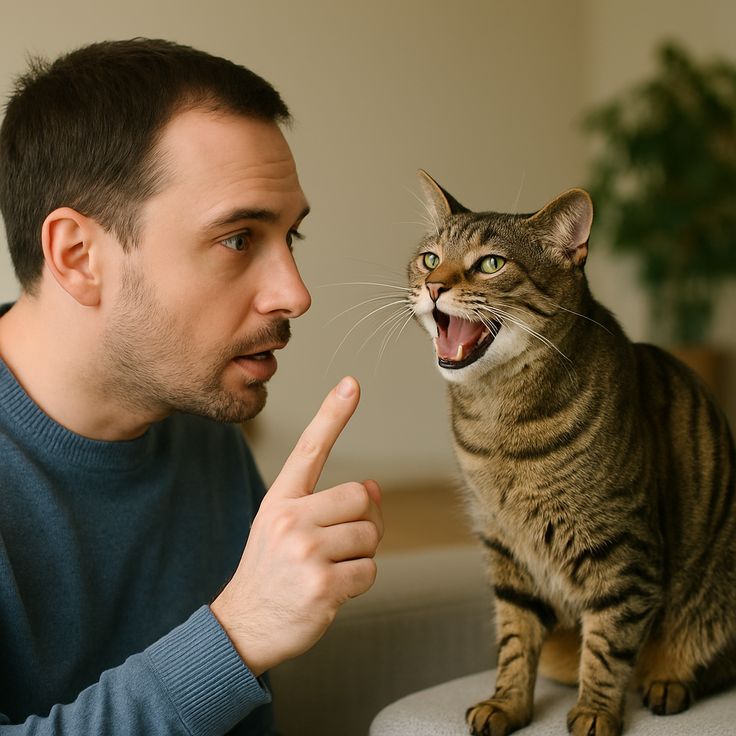
7. Pain Can Change a Cat’s Tolerance
A cat that previously accepted touch may begin biting because contact hurts. Joint pain, for example, can make handling or movement uncomfortable.
Arrange a veterinary examination for sudden, worsening, or unexplained biting, particularly if accompanied by changes in movement, appetite, grooming, or usual routines.
Avoid repeatedly touching a suspected painful area to test the reaction. Behavioral advice cannot replace assessment of a possible medical cause.
8. Build Better Interactions Through Choice
Invite contact rather than imposing it. Sit nearby, allow your cat to approach, and keep initial interactions brief. Many cats prefer gentle contact around the cheeks or head, but individual preferences matter.
Pause regularly. Continuing contact should depend on the cat remaining relaxed and choosing to participate. Rolling onto the back does not automatically invite a belly rub.
Avoid punishment, spraying water, or forced cuddling. These responses can add fear without addressing why the bite happened. Children should be supervised and taught to leave resting, hiding, or withdrawing cats alone.
9. Respond Calmly and Care for Any Wound
If a bite occurs, stop interacting and avoid sudden movements or shouting. Disengage safely and give the cat space rather than immediately trying to pet it again.
If teeth break the skin, wash the wound thoroughly with soap and running water, dry it, and cover it with a clean dressing. Seek prompt medical advice, particularly for punctures or bites to the hand, face, or near a joint.
Deep wounds, uncontrolled bleeding, or increasing redness, swelling, pain, discharge, or fever need medical attention. A clinician can assess infection risk and whether tetanus or rabies-related care is necessary.
10. FAQs About Cat Biting
Q1: Does a gentle bite always mean affection?
No. A light bite may occur during play or signal that contact is no longer welcome. Check the context rather than assuming it is a “love bite.”
Q2: Why does my cat bite me but not another family member?
People interact differently. One person may stroke longer, move their hands more, or overlook early signs of discomfort.
Q3: Should I continue petting until my cat gets used to it?
No. Stop when contact becomes unwelcome. Build trust through voluntary, comfortable interactions.
If a bite occurs,