Do Pets Get Bored? Recognising When They Need More Interaction

A dog repeatedly brings you a toy while you work. A cat begins stalking your ankles every evening. These moments may suggest that your pet is looking for something interesting to do.
Cats and dogs benefit from opportunities to explore, play, solve simple problems, and interact with people. Recognising their individual needs helps you create a more satisfying routine while leaving plenty of time for rest.
1. Understand What Boredom Can Look Like
Boredom can develop when an animal has too few opportunities to engage in rewarding activities. A home may be comfortable and well supplied with toys yet offer little variety or meaningful interaction.
For dogs, enjoyable activities may include sniffing, searching, chewing appropriate items, and learning. Cats often enjoy stalking, chasing, scratching, climbing, and investigating hiding places.
Enrichment gives these behaviours a suitable outlet. The activity becomes valuable when your pet chooses to engage with it and appears comfortable doing so.
2. Notice Changes in Your Pet’s Usual Behaviour
Compare your pet with their own normal routine. Possible signs of unmet activity needs include repeated attempts to start play, increased object chewing, or frequent searching for something to investigate.
A cat may redirect playful chasing towards moving feet. A dog may repeatedly interrupt household activities with toys or other objects.
These behaviours are clues, rather than proof of boredom. Chewing, scratching, and bursts of running can also be normal behaviours. Consider when they happen, what preceded them, and whether your pet’s routine has recently changed.
3. Avoid Assuming Every Change Means Boredom
Sudden withdrawal, reduced interest in play, excessive grooming, house-soiling, or unusual vocalisation may reflect pain, illness, or stress.
Arrange a veterinary assessment for new, persistent, or unexplained changes, particularly when appetite, drinking, mobility, or toileting also changes.
Distress during absences deserves separate attention. A dog that panics when left alone needs an assessment and an appropriate support plan; adding toys alone may not address the cause.
4. Make Exploration Part of Everyday Life
Exploration does not always require a new destination.
On walks, give your dog opportunities to investigate safe smells at a comfortable pace. A familiar route can offer fresh information without becoming longer or more physically demanding.
At home, cats can explore stable climbing structures, accessible hiding places, and scratching surfaces. A plain cardboard box may provide interest during supervised exploration, provided staples, tape, and loose pieces are removed.
Introduce changes gradually. Keep familiar resting areas available so your pet can choose between investigating and retreating.
5. Choose Games That Match Natural Interests
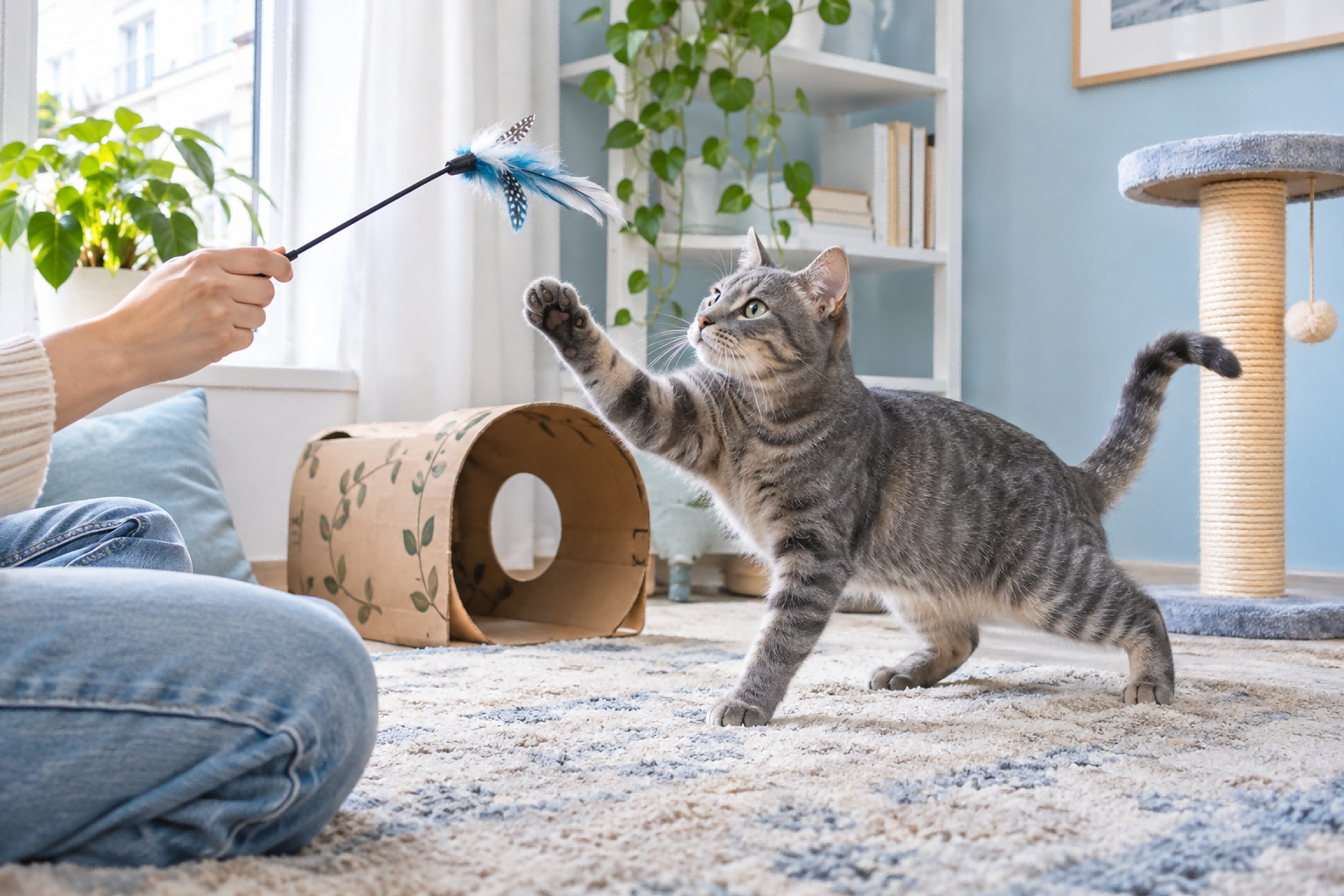
For cats, move a suitable wand toy in short, prey-like movements along the floor. Allow pauses for watching and stalking, and give them opportunities to catch it. Keep hands and feet out of the game.
For dogs, try a simple “find it” activity, a gentle retrieval game, or reward-based training. A few successful repetitions may be more enjoyable than a long session.
Watch your pet’s response. If they turn away, become frustrated, or appear uncomfortable, pause and adjust the activity. Put string and wand toys away after supervised play.
6. Introduce Food Puzzles at an Achievable Level
Food-based activities encourage searching and problem-solving. Start with an easy feeder or a few pieces of food placed in obvious, accessible locations.
Demonstrate the activity while you are present. Increase the difficulty only when your pet can succeed comfortably. If they repeatedly abandon the puzzle or bite it in frustration, simplify it.
Use part of the normal daily food allowance rather than continually adding extra treats. Separate pets when food competition is possible, and choose equipment appropriate to their size and chewing habits. Supervise new enrichment items.

7. Build Short Interactions into Your Routine
Meaningful interaction is easier to maintain when it fits naturally into the day.
You might offer a brief play session before breakfast, a sniffing opportunity during a walk, or a simple training game in the evening. Choose times when your pet is naturally awake and interested.
Keep the routine flexible. A young, energetic animal may seek more frequent activity, while an older pet may prefer gentle games and quiet companionship.
Avoid waking a resting pet simply to complete an activity schedule.
8. Rotate Activities Without Constantly Buying Toys
A small collection of suitable toys can remain interesting when you vary how they are used.
Offer a few options, then rotate some after several days. Keep favourites available if your pet finds them comforting. Change the location of an easy search game or practise a familiar skill in a quiet new setting.
Check toys regularly for damage and remove items your pet breaks into swallowable pieces.
Observe preferences before making purchases. Some pets enjoy searching much more than chasing, while others favour interactive games over objects left on the floor.
9. Look for Enjoyment and Comfortable Settling
Useful enrichment should support your pet’s wellbeing. Look for voluntary participation, relaxed exploration, and the ability to disengage and rest afterwards.
More excitement does not always mean a better activity. Repeated frantic chasing, frustration, or difficulty settling may mean the game needs to be shorter, easier, or less stimulating.
Keep brief notes if you are unsure what works. Record the activity, your pet’s response, and any behaviour changes. Share persistent concerns with your veterinarian or a qualified behaviour professional.
10. Frequently Asked Questions
Does sleeping a lot mean my pet is bored?
Sleep alone does not establish boredom. Consider your pet’s normal routine and investigate a noticeable change in energy or engagement.
Will another pet solve the problem?
Another animal may introduce stress or conflict. Assess companionship needs and compatibility carefully before adopting.
Are expensive toys more effective?
The value comes from safe, enjoyable use. A simple search game may interest your pet more than a complicated toy.
Should I play until my pet is exhausted?
Offer manageable sessions with opportunities to stop and rest. Adjust activity to health, age, and comfort.
What if my pet ignores every activity?
Try a different time, movement, or difficulty level. If loss of interest is new or persistent, seek veterinary advice.