How to Read Pet Food Labels: Choosing the Right Food and Feeding Amount

Pet food packaging can be crowded with appealing descriptions, ingredient pictures, and nutritional claims. Understanding which information matters helps you choose food that suits your pet and serve it in appropriate amounts.
For cats and dogs, begin with three questions: Is this food suitable for their life stage? Is it intended as a complete diet or an addition? How much energy does each portion provide? Label wording varies between countries, but these questions provide a useful starting point.
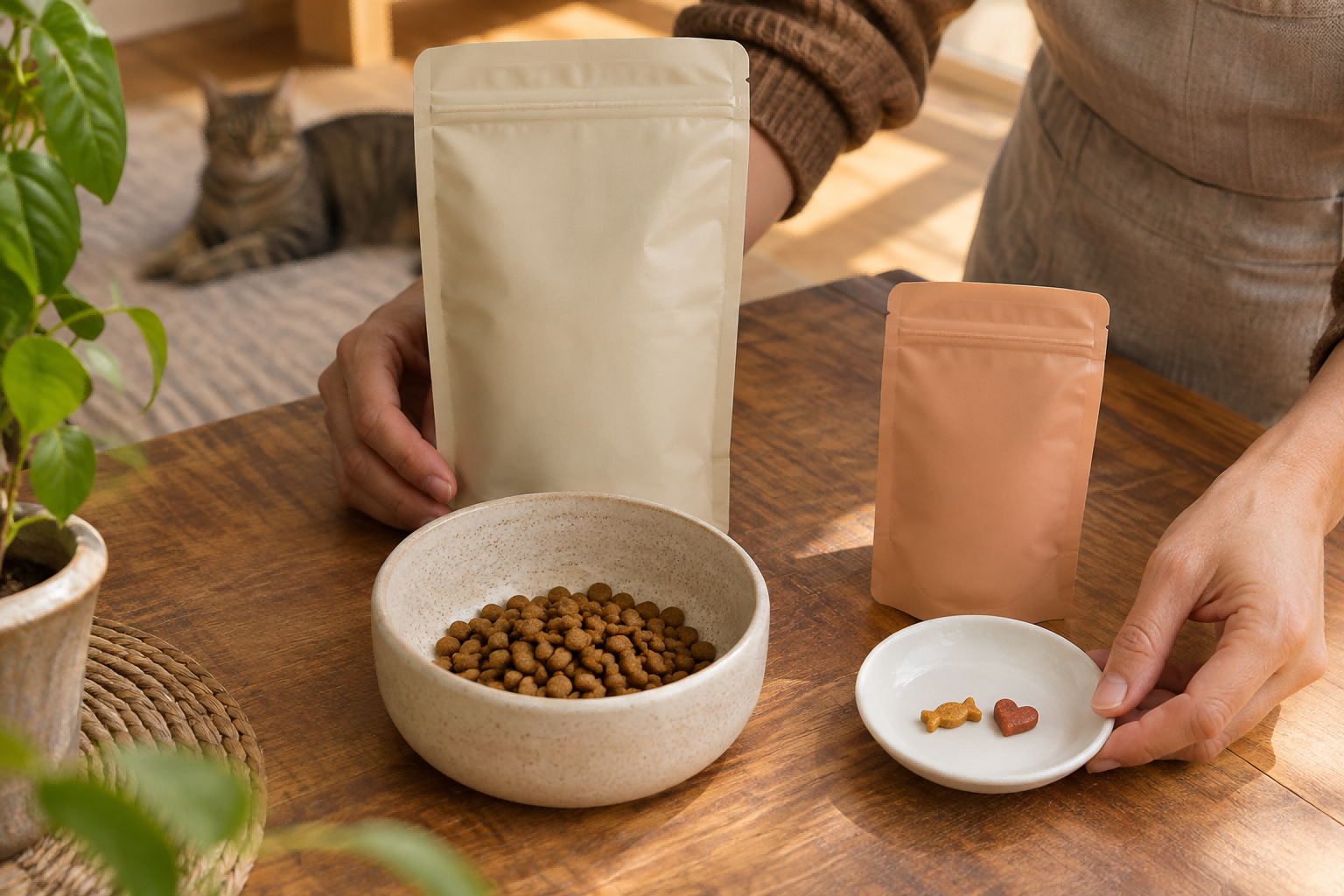
1. Check Which Animal the Food Is Designed For
Look for a clear statement identifying the intended species. Cats and dogs have different nutritional requirements, so their foods are not interchangeable as everyday diets.
Then check whether the product is a main food, treat, topper, supplement, or veterinary diet. Similar-looking pouches or cans may serve very different purposes.
Read the back or side of the package as carefully as the front. The product’s intended use matters more than its appearance.
2. Match the Food to Your Pet’s Life Stage
Growing puppies and kittens have different nutritional needs from adult animals. Pregnancy and nursing also place additional demands on the body.
On U.S. labels, the nutritional adequacy statement commonly identifies suitability for growth, reproduction, adult maintenance, or all life stages.
“All life stages” includes nutritional demands associated with growth and reproduction. It does not mean every animal needs the same portion or that the food is automatically the best choice for every adult.
For large-breed puppies, check the statement’s specific suitability for the growth of large-size dogs. Ask your veterinarian if the wording is unclear.
3. Find the Statement About Nutritional Completeness
In the United States, look for a nutritional adequacy statement indicating that the food is “complete and balanced” for the relevant life stage. It should explain whether this is supported by formulation to AAFCO nutrient profiles or feeding tests using AAFCO procedures.
On many UK and European labels, the term complete pet food identifies food intended to supply the necessary nutrients when fed appropriately for its stated purpose.
These statements describe nutritional adequacy for an intended use. They do not guarantee that a food suits every medical condition.
4. Distinguish Main Meals from Treats and Complementary Foods
A product labelled “complementary,” “treat,” “snack,” or “for intermittent or supplemental feeding only” should not automatically replace a complete main diet.
Complementary products can include treats, toppers, or foods designed to be combined with other products according to specific instructions. A pouch containing recognisable meat pieces may still lack the balance needed for everyday feeding on its own.
Check the intended use rather than judging by texture, packaging, or ingredient appearance.
5. Read Ingredient Lists in Context
Ingredients are generally listed in descending order by weight under U.S. labelling rules. This tells you what went into the product, but it does not provide a complete assessment of nutritional quality.
An ingredient containing considerable water may appear high on the list. The list also does not reveal, by itself, how well the finished food is digested or whether its overall nutrient balance suits your pet.
Use it alongside the adequacy statement, feeding information, and manufacturer’s nutritional guidance. Avoid making a decision from the first ingredient alone.
6. Understand Nutrient Percentages Before Comparing Foods
The guaranteed analysis on U.S. labels commonly gives minimum protein and fat values and maximum fibre and moisture values. These are guarantees, rather than exact amounts of every nutrient in each serving.
Moisture makes comparisons especially tricky. Wet food may show a much lower protein percentage than dry food because water forms a larger proportion of the product.
For meaningful comparisons, ask for nutrient information on a dry-matter or calorie basis. A higher printed protein percentage alone does not establish that one food is better.

7. Treat Feeding Directions as a Starting Point
Check whether the suggested amount is per day or per meal, and whether it is expressed in grams, cups, cans, or pouches.
Individual needs vary with activity, neuter status, environment, health, and body condition. The package cannot account for every animal.
Measure portions consistently, ideally by weight when a gram amount is available. Monitor weight and body condition, then adjust with veterinary guidance. Unexplained weight changes deserve assessment rather than repeated portion changes alone.
8. Use Calorie Information to Understand Portions
Look for energy information expressed as kilocalories—often written as kcal—per kilogram, cup, can, or pouch.
Two dry foods can provide different calories in the same-sized scoop. Wet and dry foods also differ substantially in energy per gram.
For illustration, if a food contains 4,000 kcal per kilogram, it supplies 4 kcal per gram. A 50-gram portion therefore supplies 200 kcal. This calculation describes the food’s energy; it does not establish your pet’s daily requirement.
When combining wet and dry foods, count both towards the same daily allowance.
9. Count Treats and Other Extras
Training rewards, dental chews, toppers, table scraps, and food used for medication can all add calories.
A common guideline for healthy cats and dogs is to keep treats and other nutritionally incomplete extras to no more than 10% of daily calories. This is a ceiling, rather than a target; some pets need stricter limits or specific restrictions.
Using part of the measured main-food allowance for rewards can simplify portion management. For pets on therapeutic diets, confirm suitable extras with your veterinarian.
10. Frequently Asked Questions
Does “premium” mean nutritionally complete?
Do not rely on the marketing description. Check the product’s nutritional adequacy or complete-food statement.
Can wet food be a complete main diet?
Yes, if it is labelled complete for the appropriate species and life stage.
Does senior-labelled food suit every older pet?
No. Health, weight, muscle condition, and nutritional needs should guide the choice.
Should I feed the full suggested amount of both wet and dry food?
Not automatically. Check whether the instructions describe exclusive feeding or a mixed-feeding plan.
What if the label is unclear?
Contact the manufacturer for clarification about intended use, nutritional adequacy, and calories, or review it with your veterinarian before making it the main diet.