Why Doesn’t My Cat Drink Much Water? Making Hydration More Appealing

You refill your cat’s water bowl every morning, yet rarely see them drink. It is natural to wonder whether they are getting enough water—or simply dislike the bowl you have chosen.
Drinking habits depend on diet, preferences, access, and health. Understanding your cat’s usual routine can help you make water more appealing while recognising changes that need veterinary attention.
1. Consider the Water Already in Their Food
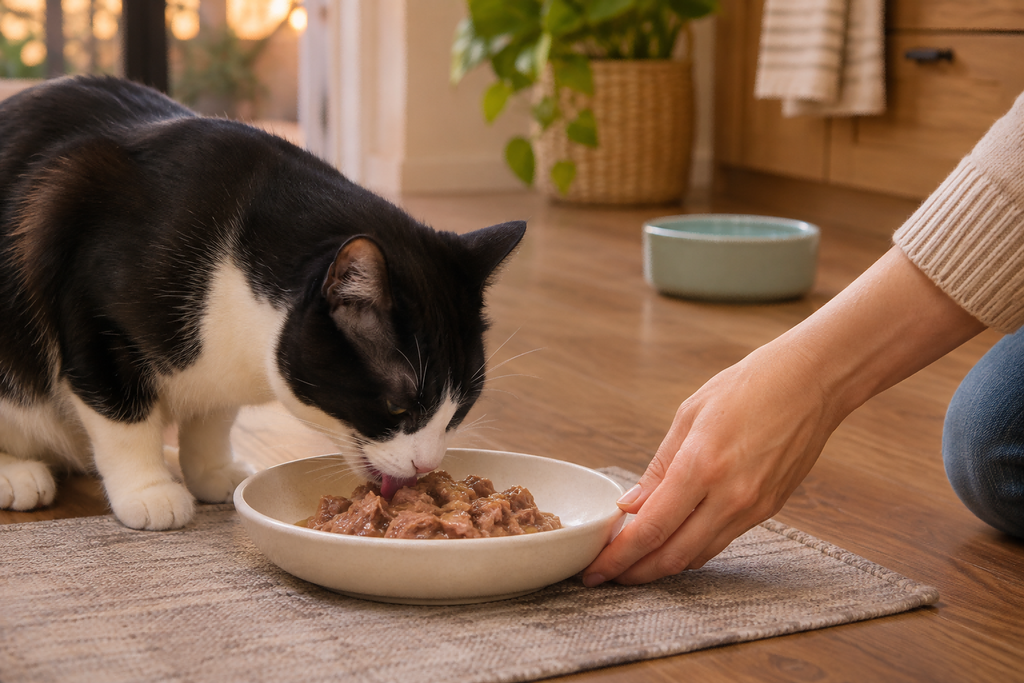
Water intake includes both drinking water and moisture from food. A cat eating wet food may visit the water bowl less often than one eating mainly dry food.
Wet cat food typically contains around 70–80% water, so meals can contribute substantially to hydration. However, all cats still need continuous access to fresh drinking water.
Seeing fewer visits to the bowl does not automatically mean your cat is dehydrated. Consider their diet and overall behaviour rather than judging by drinking alone.
2. Learn What Is Normal for Your Cat
Notice where your cat drinks, when they visit, and which containers they choose. Some drink quietly overnight or use a bowl in another room.
You can measure how much water you offer and what remains over a consistent period. Allow for spills and evaporation, and remember that shared bowls make individual intake difficult to estimate.
Keep brief notes about food, drinking, and litter-tray habits. These observations are useful if something changes, although they cannot establish hydration status by themselves.
3. Choose a Quiet, Accessible Location
A bowl beside a noisy washing machine or in a busy doorway may feel uncomfortable to use.
Offer water in a calm location where your cat can see their surroundings and approach without being cornered. Keep it away from the litter tray, and try separating it from the food bowl.
Place water where your cat already spends time. Older cats or those with mobility difficulties should not have to climb stairs or jump onto furniture to reach it.
4. Offer Several Drinking Stations
One water bowl may not provide convenient access throughout the home. Try placing bowls in several quiet locations.
This is especially helpful in households with multiple pets. A cat may avoid a bowl if another animal watches, chases, or blocks them nearby. Separate stations give them more choice.
Observe how each location is used. Keep successful options available rather than repeatedly moving every bowl. Easy, comfortable access matters more than arranging all pet supplies together.
5. Experiment with Bowl Shape and Material
Try a stable, wide bowl that is easy to drink from. Some cats prefer containers that leave more space around their faces.
Food-safe ceramic, glass, or stainless steel are practical options when kept clean and in good condition. Individual preferences vary, so compare a few containers you already own before buying specialist equipment.
Avoid chipped surfaces and unstable drinking glasses. Change one feature at a time—such as shape or material—so you can identify what your cat prefers.
6. Keep Water and Equipment Fresh
Replace drinking water at least daily, and sooner if food, hair, or debris gets into it. Wash bowls regularly, rinse thoroughly, and refill with fresh water.
A fountain also needs cleaning. Follow its instructions for washing the reservoir, dismantling the pump, and replacing filters. Circulating water does not eliminate the need for maintenance.
If your cat appears sensitive to the taste of your drinking water, you can offer filtered water alongside their usual supply. Keep a familiar option available while testing preferences.
7. Try Moving Water Without Assuming It Will Work
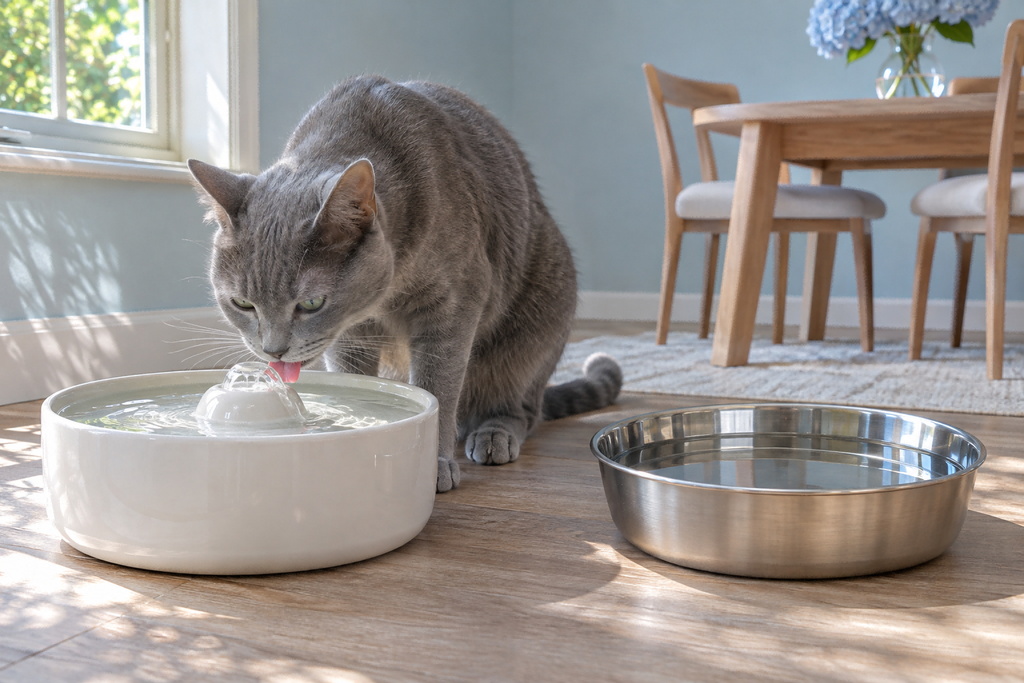
Some cats enjoy drinking from a pet fountain, while others prefer still water. A fountain is an option to test, rather than an essential purchase.
Choose a stable model that is easy to clean. Introduce it in a quiet area, secure the cable, and let your cat approach voluntarily.
Continue providing an ordinary bowl in case the fountain stops working or your cat avoids it. Watching or playing with flowing water does not necessarily mean they are drinking more.
8. Use Wet Food as Part of a Suitable Feeding Plan
A complete wet food appropriate to your cat’s life stage can contribute water alongside balanced nutrition. Introduce dietary changes gradually and account for calories when combining wet and dry foods.
Some cats accept a small amount of water mixed into their usual food. Start gently, serve fresh, and avoid making meals so diluted that your cat refuses them.
Do not withhold familiar food to force a change. If your cat follows a prescribed diet, discuss adjustments with your veterinarian first.
9. Take Sudden Changes Seriously
A noticeable increase or decrease in drinking deserves attention, especially alongside changes in appetite, weight, energy, or urination.
Increased thirst can accompany conditions such as kidney disease or diabetes. Reduced intake may occur with illness, discomfort, or difficulty reaching water. Contact your veterinarian rather than assuming a new bowl will resolve the change.
Seek prompt veterinary advice if your cat seems weak, unusually lethargic, or unable to keep water down. Repeated straining with little or no urine is an emergency, particularly in male cats. Do not restrict water because your cat is drinking more.
10. Frequently Asked Questions
Does my cat need a fountain?
No. Clean bowls in comfortable locations may work well. Choose according to your cat’s response.
Can wet food replace drinking water?
Wet food contributes moisture, but fresh drinking water should always remain available.
Should I add milk to encourage drinking?
Water is the appropriate everyday drink. Milk is unnecessary and may cause digestive upset.
How much should my cat drink?
Needs vary with body size, diet, health, and environmental conditions. Ask your veterinarian about an appropriate total water intake, including food moisture.
What if my cat suddenly starts emptying the bowl?
Contact your veterinarian. Increased drinking can be an early sign of a health problem, even when your cat otherwise appears well.