Seasonal Shedding: How to Care for Your Pet’s Coat and Skin

More fur on the sofa, loose hair on your clothes, and a brush that fills surprisingly quickly—seasonal shedding can make pet care feel like a daily cleaning project.
For cats and dogs, shedding is often part of normal coat renewal. The aim is to remove loose hair gently, maintain a clean environment, and recognise when coat changes need veterinary attention.
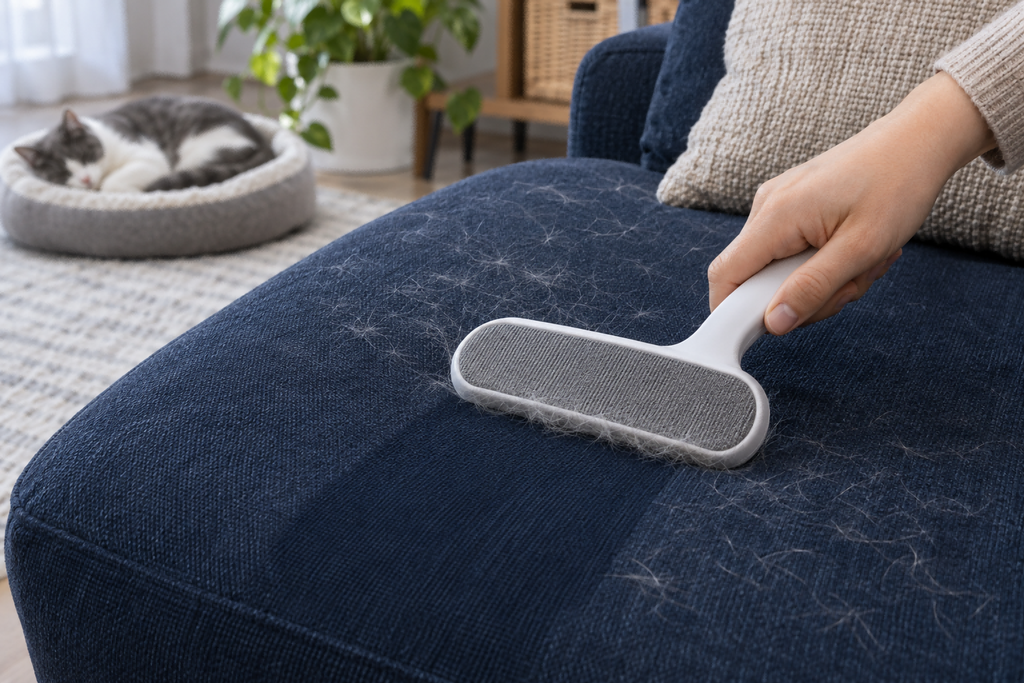
1. Understand What Normal Shedding Looks Like
Many cats and dogs shed more noticeably during seasonal transitions, particularly in spring and autumn. The amount varies with coat type, individual characteristics, and living conditions.
Normal shedding generally leaves the coat evenly covered and the skin comfortable. Your pet should not develop new bald patches, sore areas, or persistent itching simply because the season has changed.
Compare your pet with their usual pattern. A short-haired animal can shed heavily, while a longer coat may trap loose hair and develop tangles.
2. Distinguish Shedding from Abnormal Hair Loss
Shedding releases old hairs as the coat renews. Abnormal hair loss may appear as bare patches, uneven thinning, broken hairs, or areas repeatedly licked and chewed.
Watch for accompanying changes such as:
- Redness, scabs, or sores.
- Persistent scratching or rubbing.
- Flaking, discharge, or unusual odour.
- Discomfort when touched.
- Changes in appetite, thirst, weight, or energy.
These signs can have several causes, including parasites, allergies, infection, pain, or hormonal disease. Their appearance alone cannot identify the cause.
3. Choose Grooming Tools for the Coat
Use a brush or comb suited to your pet’s coat rather than choosing the strongest-looking shedding tool.
A gentle brush may suit a short coat, while longer or denser coats may need careful brushing followed by combing to check for tangles. Ask a veterinarian or experienced groomer to demonstrate suitable equipment if you are unsure.
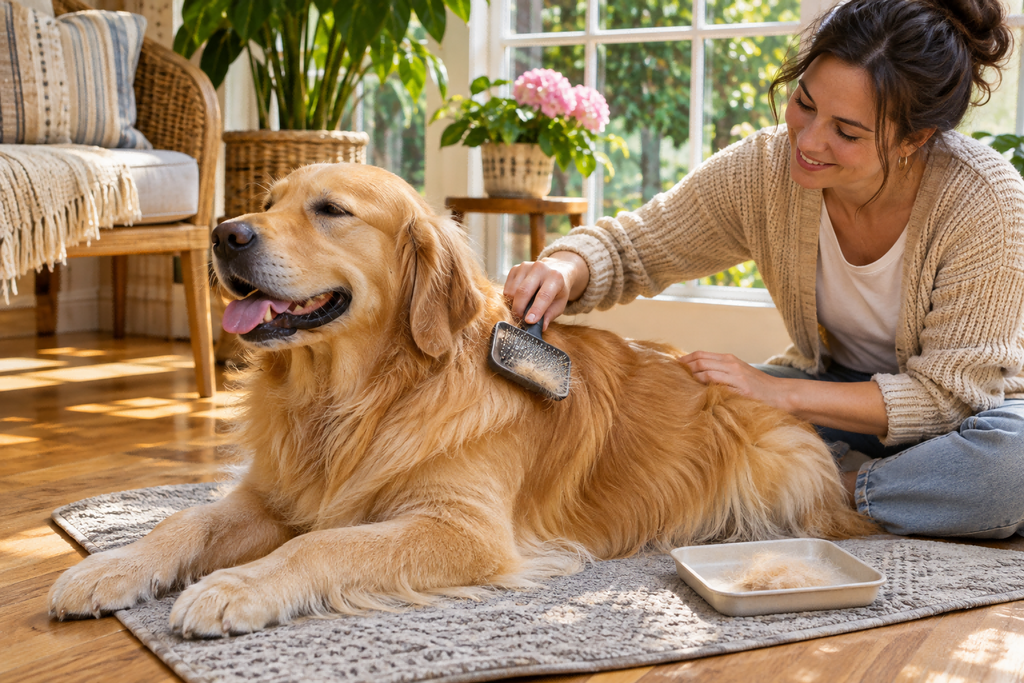
Use light pressure and avoid repeatedly scraping the same area. More hair coming off does not necessarily mean better grooming; excessive brushing can irritate skin or damage the coat.
4. Keep Brushing Sessions Short and Comfortable
Begin when your pet is awake, relaxed, and willing to interact. Let them inspect the brush, then try a few gentle strokes in an area they comfortably accept.
Reward cooperation with praise or a small suitable treat. Gradually work across the body, following the direction of hair growth and checking your pet’s response.
Pause if they tense, turn away, flick their tail repeatedly, growl, or try to leave. Short, regular sessions are easier to tolerate than one prolonged attempt to remove every loose hair.
5. Treat Tangles and Mats Carefully
Loose hair can collect behind the ears, under the legs, around the hindquarters, and beneath collars or harnesses. Check these areas gently.
Do not pull tight mats away from the skin or try to cut them out with scissors. Skin can become caught within the mat and is easily injured.
If a comb cannot pass through comfortably, seek professional help. Extensive matting, painful skin, or a pet unable to tolerate handling may require veterinary care.
Routine shaving is not a necessary response to seasonal shedding. Discuss clipping with a professional who understands your pet’s coat and skin.
6. Bathe Only When Appropriate
Bathing needs depend on species, coat, lifestyle, and health. Frequent washing is not a universal solution for shedding.
Most healthy cats do not need routine baths. Dogs may need washing when dirty, but unnecessary bathing or unsuitable products can irritate the skin.
Use a product intended for your pet’s species, rinse thoroughly, and dry them comfortably. If your pet already has a skin condition, ask your veterinarian which products and bathing schedule are appropriate. Avoid applying human dandruff shampoos or medicated treatments without advice.
7. Make Household Cleaning Manageable
Focus on places where loose hair collects: bedding, upholstery, rugs, and favourite resting spots.
Wash removable covers according to their care instructions, vacuum regularly, and use a suitable lint brush on fabrics. Clean grooming tools after use and allow them to dry.
Choose cleaning products appropriate for a home with pets, following dilution and ventilation instructions. Keep animals away from wet cleaning solutions until surfaces are safe to access.
Cleaning helps manage loose fur, but it does not treat the cause of abnormal hair loss.
8. Use Grooming to Observe the Skin
During brushing, gently part the coat and look at the skin underneath. Notice new redness, flaky patches, lumps, wounds, or areas your pet finds sensitive.
Check for parasites and discuss suitable prevention with your veterinarian. Not seeing fleas does not rule out a flea-related problem.
Photograph a concerning area in consistent lighting and record when you first noticed it. Avoid picking scabs or applying creams before seeking advice.
Use parasite products only for the species and weight specified. Some dog flea treatments are dangerous to cats.
9. Support Coat Health and Know When to Seek Help
Provide a complete diet appropriate to your pet’s needs. Adding oils or “coat supplements” without assessing the diet may introduce unnecessary calories or interfere with an existing care plan.
Arrange a veterinary appointment for new bald patches, persistent itching, unusual thinning, or repeated overgrooming. Seek prompt care for painful, bleeding, wet, or discharging skin, especially if your pet also seems unwell.
Cats may lick painful or itchy areas rather than visibly scratch. Do not assume hair loss is caused by stress until medical causes have been assessed.
10. Frequently Asked Questions
How much shedding is too much?
There is no single normal amount. Look at the pattern, skin condition, comfort, and changes from your pet’s usual coat.
Should I brush every day during shedding season?
Some coats benefit from daily attention. Adjust frequency to coat type and tolerance, keeping sessions gentle.
Will shaving stop shedding?
Clipping shortens hair but does not stop the normal shedding cycle. Seek coat-specific advice before considering it.
Does scratching always mean fleas?
No. Parasites are one possibility, alongside allergies, infections, and other causes that require assessment.
Can seasonal shedding cause bald patches?
New bald or patchy areas should be checked rather than dismissed as ordinary seasonal shedding.