Preventing Lost Pets- ID Tags, Microchips, and Everyday Escape Prevention

A door left open for a delivery, a loose harness, or a damaged garden gate can create an unexpected escape opportunity. Even a pet that normally stays close may run when frightened or distracted.
For cats and dogs, preparation works best in layers: secure surroundings, suitable equipment, visible identification where appropriate, and an up-to-date microchip registration. Each serves a different purpose in helping prevent separation or support a reunion.
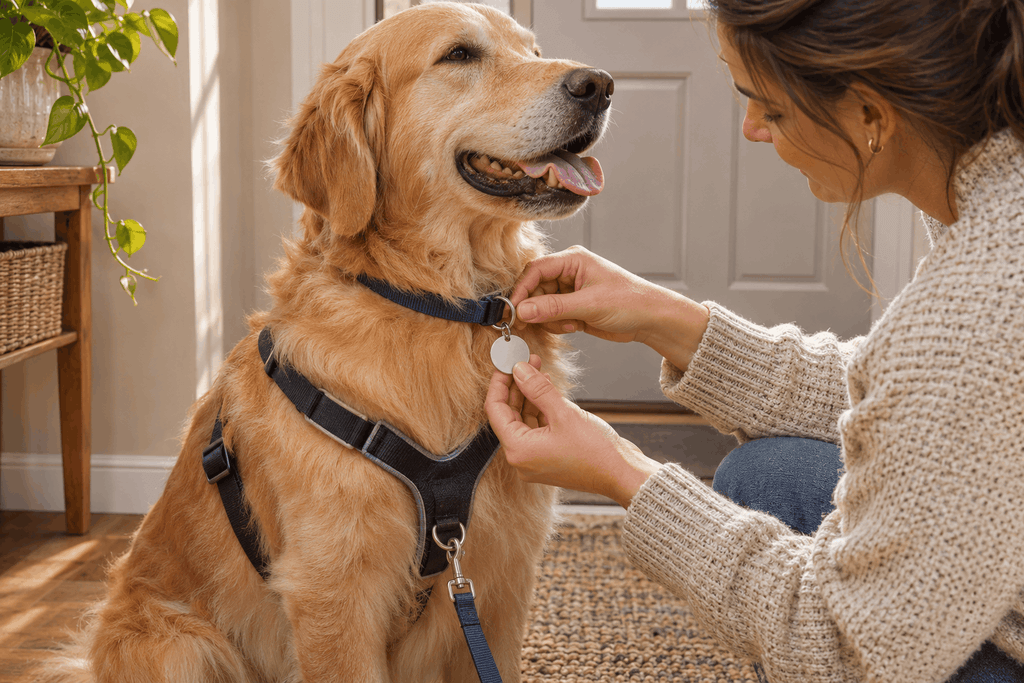
1. Understand What Each Identification Method Does
An identification tag lets someone read your contact details without special equipment. A microchip provides an identification number that a veterinary clinic, shelter, or other equipped organisation can scan.
A location tracker serves a different role: it may help you locate the device attached to your pet.
These tools complement one another, but none prevents an animal from escaping. Everyday checks and careful handling remain essential. A microchip cannot track your pet’s movements.
2. Keep Visible Identification Clear and Current
Where a collar is safe and appropriate, choose identification that remains readable and securely attached. Include a telephone number you regularly answer, and consider a backup contact.
Check for worn engraving, damaged attachment rings, and outdated details. For international travel, include the country code on your telephone number.
Identification requirements vary by location, so check the applicable rules before deciding what information to display.
For cats, collar safety needs particular attention. If you use one, choose a properly fitted quick-release design that can open if caught. Avoid bulky attachments that could snag or interfere with the release mechanism.
3. Register the Microchip—and Verify the Details
Implanting a microchip and registering it are separate steps. Confirm that its number is linked to your current contact information in the appropriate registry.
After adoption, check that the registration has been transferred correctly. Updating your veterinary clinic’s records does not necessarily update the microchip database.
Save the chip number, registry name, and account details somewhere accessible. Review them whenever you move, change telephone numbers, or transfer responsibility for the pet.
Ask your veterinary team to check the chip during routine visits; an annual scan can help confirm that it remains detectable.
4. Know the Limits of Location Trackers
A tracker may provide useful location information, but its performance depends on the technology and conditions.
GPS devices may rely on satellite reception, mobile coverage, battery power, and a subscription. Bluetooth-based tags generally depend on nearby compatible devices and may not provide continuous updates.
Check the device’s size, weight, attachment method, and suitability for your animal. For cats, an attachment must not compromise a quick-release collar.
A tracker can become detached or lose power. Continue maintaining your pet’s other identification and escape precautions.
5. Create a Safe Doorway Routine
Front doors are especially vulnerable during deliveries, visitors’ arrivals, and moving furniture.
Before opening an external door, know where your pet is. Use a familiar room or suitable secure barrier when needed, and ask household members to follow the same routine.
Teach dogs to wait away from the doorway using rewards, practising first when the door is closed. Gradually introduce small distractions while maintaining a physical safeguard.
Training adds protection, but it should not be the only thing between a curious pet and an open street.
6. Inspect Windows, Gardens, and Outdoor Enclosures
Check gates, fence gaps, loose panels, and spaces beneath boundaries. Move bins, furniture, and other climbing aids away from fences.
Secure windows and balconies with barriers designed to contain your pet. An ordinary insect screen may not withstand pushing, climbing, or scratching.
For cats, a properly designed enclosed outdoor area can offer exploration while limiting roaming. Inspect mesh, doors, and connections regularly.
Recheck boundaries after storms, repairs, or gardening. Stay with a dog that may escape, using suitable restraint where necessary.
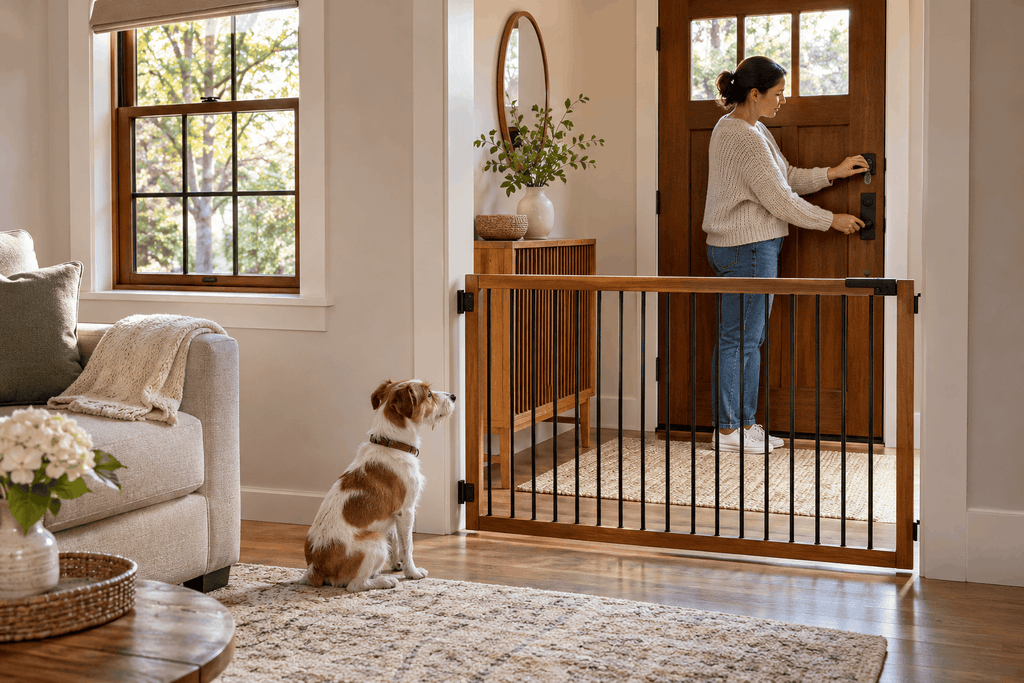
7. Check Equipment Before Every Outing
Inspect leads, clips, harness buckles, and carrier doors for damage. Confirm the fit, particularly as young animals grow or an adult’s weight changes.
A harness should be secure without restricting comfortable movement. For dogs known to back out of equipment, seek help selecting and fitting an appropriate arrangement.
Transport cats in a secure carrier, and open it only in an enclosed, safe setting. Never assume a frightened animal will remain in your arms.
Before opening a vehicle door, make sure your pet is safely contained or securely attached.
8. Prepare Caregivers and Practise Useful Skills
Give sitters, walkers, and visiting family clear instructions about doors, equipment, and your pet’s escape risks. Demonstrate routines rather than relying on a written note alone.
For dogs, practise recall in secure areas and reward returning consistently. Use a suitable harness and long line where needed, following local access rules.
Also consider why an animal tries to escape. Fear, frustration, or attraction to something outside may need changes to the environment or professional behavioural support.
9. Keep a Reunion Kit Ready
Save recent photographs showing your pet’s face, full body, and distinctive markings. Keep identification numbers, adoption records, and relevant veterinary documents accessible.
Record contact details for local shelters, veterinary clinics, and the authority responsible for found animals in your area.
If your pet goes missing, begin acting promptly: check the home and nearby enclosed spaces, notify relevant organisations, and report the pet missing to the microchip registry. Share a clear description, last-seen location, and reachable contact number. Keep some identifying details private to help verify genuine reports.
10. Frequently Asked Questions
Does an indoor-only cat need identification?
Accidental escapes can happen. Discuss microchipping with your veterinarian and maintain current registration details.
Can a microchip show my pet’s location?
No. It provides an identification number when scanned.
Is a collar tag enough?
Tags can be lost or damaged. A registered microchip provides an additional identification method.
Should I let my dog off-lead because they wear a tracker?
A tracker does not make an unsafe setting suitable. Consider recall, surroundings, and local rules.
How often should I review everything?
Check equipment routinely and update identification details immediately after changes. Review photographs, caregiver instructions, and registry information regularly.