When Your Dog Pulls on the Leash: Building More Relaxed Walks

A walk can quickly become tiring when your dog pulls towards every interesting smell, person, or passing dog. Pulling is common, especially when the outside world feels exciting or unfamiliar.
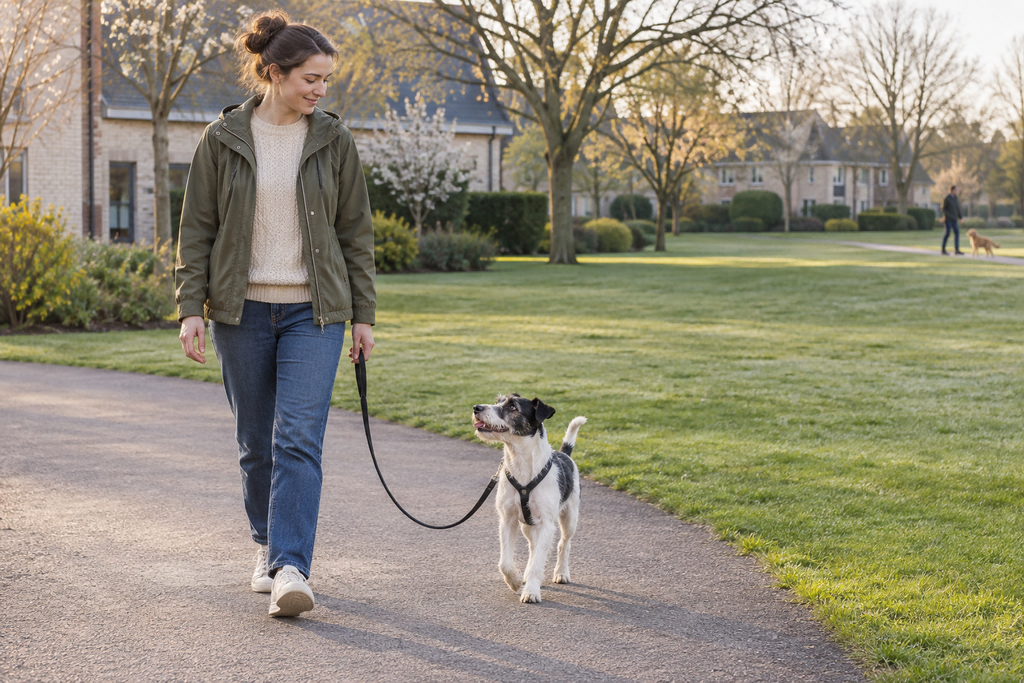
Loose-leash walking is a skill that develops through practice. Comfortable equipment, well-timed rewards, and manageable surroundings help your dog learn to move with you while still enjoying opportunities to explore.
1. Understand Why Your Dog Pulls
Dogs may pull because they want to reach something, naturally walk faster than their handler, or have learned that tension on the leash leads to forward movement.
Fear can also cause pulling, particularly when a dog is trying to leave an uncomfortable situation. Notice whether your dog appears curious and relaxed or tense and eager to escape.
Understanding the reason helps you respond appropriately. A frightened dog needs distance and reassurance rather than a prolonged training exercise near the thing that worries them.
2. Choose Comfortable, Secure Equipment
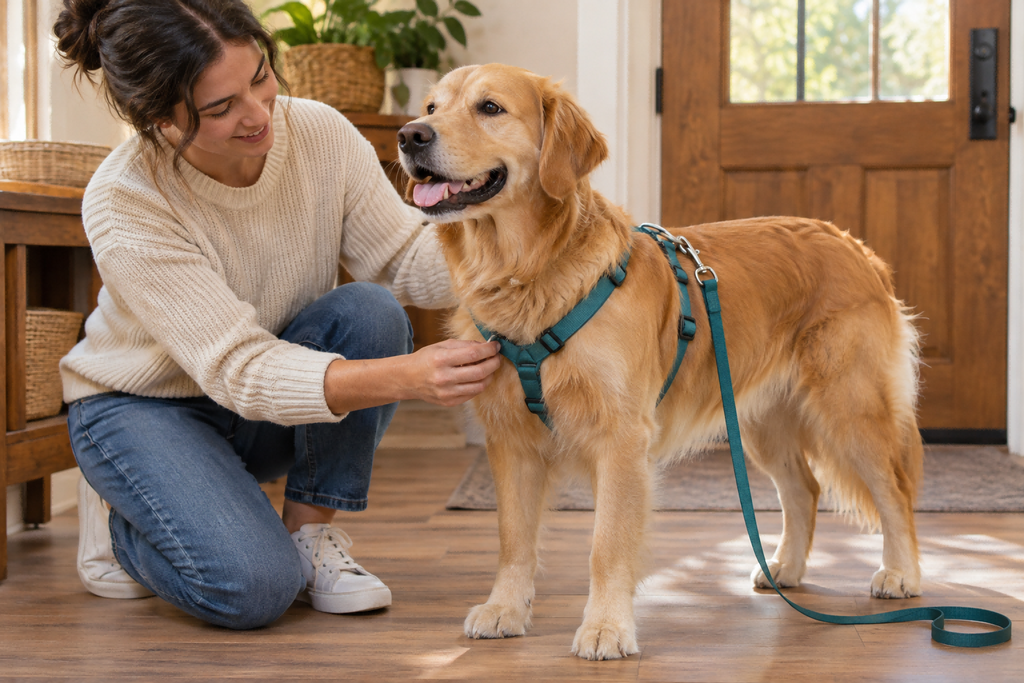
A well-fitted harness is a practical option for a dog that pulls, helping avoid pressure on the neck. Check that it allows comfortable movement, does not rub, and cannot easily slip over the head.
Use a fixed-length leash that gives your dog some room while allowing safe handling. Keep enough slack for comfortable movement without letting the leash trail into hazards.
Equipment supports training; it does not teach the skill by itself. Avoid leash jerks and equipment designed to cause pain or tighten around the neck.
3. Define a Realistic Goal
For everyday walks, aim for a relaxed leash and comfortable movement together. Your dog does not need to maintain a formal heel position or stare at you throughout the outing.
Choose a convenient side for initial practice so you can deliver rewards consistently. Later, you can teach your dog to walk on either side when needed.
Allow sniffing and pauses where safe. A successful walk includes opportunities to meet your dog’s needs alongside moments of walking close to you.
4. Begin Where Success Is Easy
Start indoors, in a secure garden, or in another quiet, familiar space. Busy pavements and crowded parks introduce too many competing interests for many beginners.
With the leash loose, reward your dog for standing near you. Take one step, then reward again if they move with you without tightening the leash.
Build from one step to a few steps. Keep early sessions brief and finish while your dog remains comfortable and interested. This foundation makes outdoor practice easier.
5. Reward Before the Leash Becomes Tight
Timing helps your dog understand what earns a reward. Notice the moments when they walk near you, leave slack in the leash, or voluntarily check in.
Mark that moment with a familiar word such as “yes,” then deliver a small reward near your leg. Avoid holding the treat far ahead, which can encourage reaching and rushing.
Reward frequently at first. As the skill becomes reliable, gradually increase the number of comfortable steps between rewards. Return to more frequent rewards when distractions increase.
6. Respond Calmly When Pulling Happens
In a safe setting, stop moving when the leash becomes tight. Keep your hands steady without yanking your dog backwards.
Encourage them to turn towards you or take a step back. Once the leash loosens, resume walking and reward a few successful steps.
If this happens repeatedly, simplify the task. Shorten the practice distance, reward sooner, or move somewhere quieter.
Focus on rewarding sustained loose-leash movement so the routine does not become “pull, return for a treat, pull again.”
7. Adjust the Difficulty of the Environment
Distractions have different levels of difficulty. A distant dog may be manageable, while one passing closely may make learning impossible.
Use distance as a training tool. Cross the road, choose a wider path, or turn away early when you notice something challenging.
If your dog cannot respond to familiar cues, repeatedly lunges, or refuses food they normally enjoy, the situation may be too difficult. Create space and reassess. Food refusal can have other causes too, so consider the whole picture.
Increase distractions gradually rather than expecting indoor skills to transfer immediately to a busy street.
8. Use Exploration as a Reward
Food is useful, but access to an interesting smell can also reward relaxed walking.
When your dog moves towards a safe sniffing spot with a loose leash, offer a release cue such as “go sniff” and approach together.
Alternate short training stretches with exploration. This gives the walk a purpose your dog can enjoy and reduces the pressure to concentrate continuously.
Keep food rewards small and include them in the daily feeding allowance. You can use suitable portions of your dog’s usual food when motivating enough.
9. Keep Expectations Consistent and Seek Help When Needed
Agree on a simple approach with everyone who walks your dog. Practise the same skill in short, manageable sessions rather than demanding perfect behaviour throughout every outing.
Choose quieter routes while learning, and allow time for toileting and exploration. Do not sacrifice essential care while waiting for training to progress.
If pulling puts either of you at risk, or accompanies persistent barking, lunging, or fear, seek a qualified reward-based trainer or behaviour professional. Sudden changes in walking behaviour or signs of discomfort also warrant veterinary advice.
10. Frequently Asked Questions
Will a harness stop pulling immediately?
It may make handling more comfortable, but your dog still needs practice and reinforcement.
Should I keep the leash short and tight?
Allow appropriate slack while maintaining safety. Constant tension makes relaxed walking harder to practise.
What if my dog ignores treats outdoors?
Try a quieter location or increase distance from distractions. Check whether your dog is worried, uncomfortable, or simply uninterested in that reward.
How long will training take?
Progress varies with experience, age, health, and surroundings. Look for small improvements rather than a fixed deadline.
Can an older dog learn?
Yes. Adapt the pace, equipment, and rewards to their abilities, and investigate any discomfort that affects walking.