Why Do Thunderstorms Make Pets Anxious? Practical Ways to Relieve Fear

During summer storm periods, pet owners start noticing strange behaviors in both their cat and dog. Cats frequently hide under beds, get their hair up and breath rapidly due to fear, whereas dogs keep walking in circles, becoming very closely attached to their owners, shaking, whining and barking without stopping. The majority of human beings think that their pets happen to be simply very timid and after the storm, that would calm down. On the contrary, fear of storms in animals is way more than simple We can call it a phobia of thunder as well as a stress reaction of the behavior type. As a cat and dog behavior expert I can tell you that repeatedly experiencing thunderstorm anxiety not only causes long-term stress but also weakens the immune system and makes the pet brain turn to harmful behaviors like trying to run away, self-harming and getting sick due to stress. This piece of writing explains which factors make a thunderstorm a cause of pet fear and offers a number of simple at-home procedures to calm an upset pet.
1.Normal Alertness vs. Panic: Differentiating Pet Emotional States During Storms
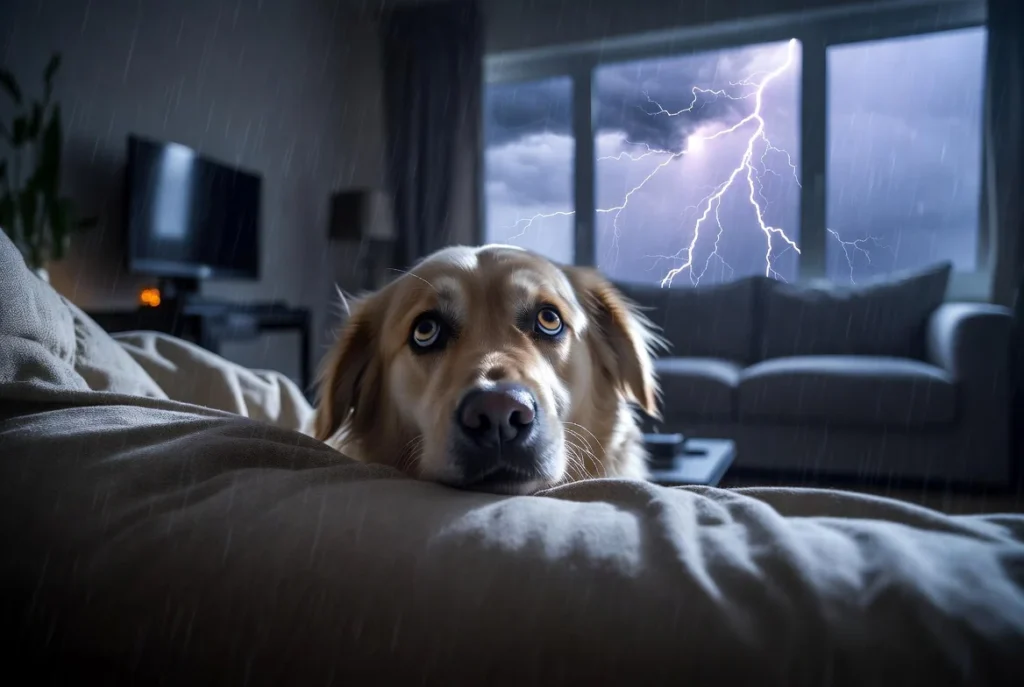
Not every pet that reacts to a thunderstorm is necessarily indicating a phobia. Pet owners must be able to tell apart normal alertness from excessive panic. Pets alert in a normal way will at most look up and stay attentive at the sound of thunder, but in a moment will go on resting, eating, and other everyday activities as their emotions remain stable and there is no sign of abnormal behavior. On the contrary, pets suffering from severe storm phobia lose control at once just before or at the time of the thunder crash. They manifest continuous trembling, ceaseless hiding, restlessness, no appetite, and heavy panting. Put simply, normal alertness is a short lived interest which does not change the physical and mental condition, whereas excessive panic results in ongoing emotional breakdown and calls for scientific treatment.
2. Common Owner Mistakes That Worsen Pet Thunderstorm Fear
A lot of pets’ thunderstorm phobia is made worse by their owners’ wrong ways of comforting. The biggest mistake is over-comforting: hugging, petting, and speaking softly in a tense tone when pets are scared. Too much attention convinces the pets that the thunderstorms are really dangerous and so strengthens their fearful association. Some owners may shout at or force their pets out of hiding places, which add to the pets’ stress and traumas. Others simply do nothing and leave the anxious pets alone. Long-term neglect only makes negative fear memories stick and the storm reactions will become more intensified after every thunderstorm.
3.Hidden Dangers of Long-Term Thunderstorm Stress in Pets
Frequent thunderstorm-induced stress over a long period can lead to a double whammy of physical and mental harm to pets. Mentally, pets develop very strong conditioned reflexes and associate the sight of cloudy, windy, or rainy weather with fear and anxiety. The ongoing, very intense emotional stress results in pets becoming overly sensitive and fearful, and physically, acute stress leads to rapid heartbeat, shortness of breath, and high blood pressure, which eventually cause gastrointestinal problems, reduced appetite, and diarrhea. Long-term, repetitive stress also results in lowered immune system functioning, and skin problems and inflammation may be the outward signs of this. In some cases, the frightened animals even injure themselves by banging against doors, running away from home, or the like.
4. Standard Rules for Calming Pets During Thunderstorms
In fact, seasoned pet behaviorists argue that there are four main things that owners need to do if they want to calm down their pets during storms: disregard the pet’s panic, cut down the level of stimulation in the environment, give the pets a secure place, and not give in to the fear. So, when a storm occurs, the pet owners should be just as serene as always and keep the day-to-day activities going just as usual without trying to comfort the pets deliberately or giving them too much attention. Close doors and windows, draw blackout curtains to block lightning flashes and outdoor noises. Have a special comfort corner at hand where the pets can retreat and get their stress off by themselves. Keep the house quiet, use mellow background noises to cover the thunder and very gradually help the pets get over their fear by providing them with a friendly and secure environment.
5.How Age and Breed Influence Pets’ Storm Noise Tolerance
Age, physical condition, and breed can lead to drastic differences in pets’ storm tolerance levels. Young pups and kittens get their brains matured very slowly and are most of the times extremely sensitive to sudden loud noises, which give them the fear of storm birds for life. Old pets have a tender mind and lower bravery, so they show even a higher level of stress. Healthy adult pets have a stable mood and a better ability to tolerate noise. Regarding breeds, small dogs and long-haired cats who have a very sensitive hearing will perceive thunder and sound waves more deeply so they will show obvious fear reactions. Large dog breeds and calm pets will have a higher adaptability level and milder symptoms. Timid, sensitive pets that had fright experienced in the past might suffer from far more severe thunderstorm phobia.
6. Cats vs. Dogs: Major Difference in Thunderstorm Fear Reactions
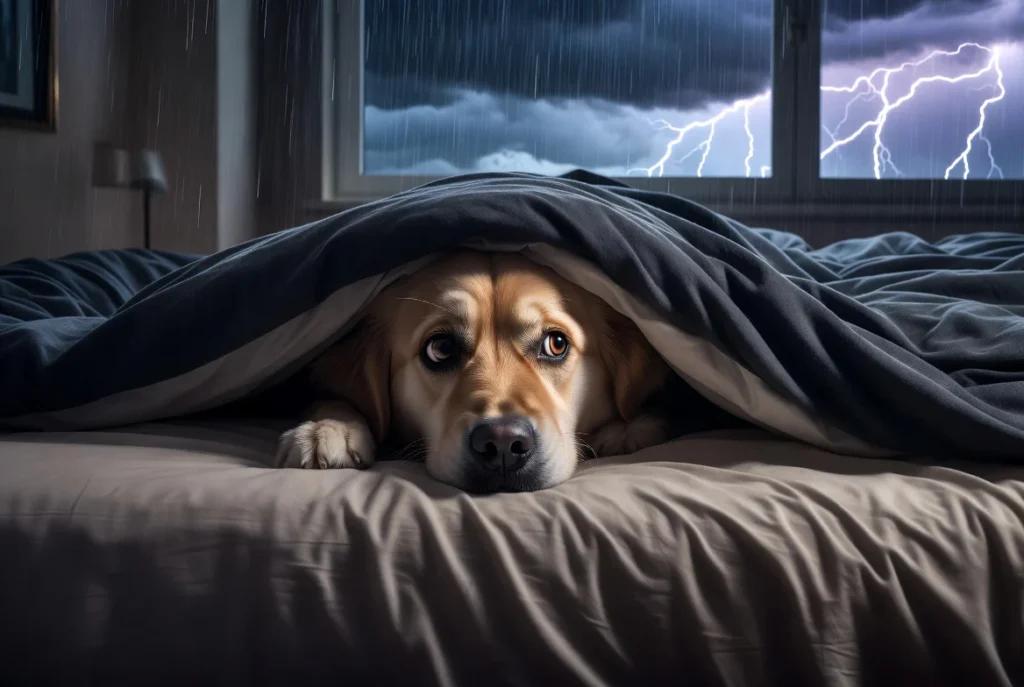
Felines and canines demonstrate entirely distinct fears behaviors during a thunderstorm. Cats’ fears are usually hidden with the showing at most a few signs only. When frightened, these felines instantly get under beds, inside cupboards, or any other enclosed corners and stay stiff and still with eyes enlarged and fur standing on end. If the situation is severe cats may refuse food, hide constantly, and the stress can even result in urinary retention. Dogs make their fears known through visible panic as going on and on pacing, whimpering, barking, clinging to owners, and panting heavily. Afraid dogs can even show such behavior as running wildly or crashing in barriers.
7.Typical signs of thunderstorm anxiety and fear in pets
Pets often show clear and noticeable signs of their anxiety and fear of thunderstorms well in advance and during a storm. This gives owners the opportunity to intervene appropriately and prevent further stress. Some of the emotional changes that you may notice are your pet becoming suddenly very dependent and loving, never leaving your side, intentionally hiding, looking at you with fearful eyes, and generally having a “tight” mental state. Physically, they may show body shakes, very fast heartbeat, lots of panting, dry nose, and general being stiff and tense. Behavioral irregularities include repeated attempts to find a hiding place, pacing around restlessly, licking lips more than usual, decreased appetite, inappropriate urination, and incessant barking.
8. Practical home remedies to relieve pet storm fear
The first step is to block external stimulation by closing the windows and drawing the curtains so that you can isolate the noise of the lightning and thunder. Number two, use white noise, fans, or soft music to cover the sudden sound of thunder and thus reduce the annoyance caused by the noise. Number three, provide your pet with the enclosed beds, cardboard boxes, or even tent shelters so that they have the safe and secure wrap-style kind of space for hiding. Number four, try to tire your dog out a little through gentle interactive play so that when the storm arrives they have a more stable mood. Number five, use the opportunity to give your pet treats and use toys to distract him/her; doing so will help associate bad weather with good things. Number six, keeping the owner attitude cool and maintaining normal daily routines might help avoid the amplification of tension inside the house. Number seven, through consistent desensitization training, playing the thunderstorm audio at very low volume very regularly might lead to the improvement of pet’s noise tolerance gradually.
9. Core Behavioral Reasons Why Pets Fear Thunderstorms
Two key factors explain pets’ innate thunderstorm fear. First, superior sensory perception. Pets have far more sensitive hearing, smell, and environmental detection abilities than humans. They can sense pre-storm changes in air pressure, static electricity, and magnetic fields, causing physical discomfort and instinctive panic before thunder arrives. Second, genetic survival instincts. In the wild, thunderstorms represent unpredictable dangers and natural disasters. Pets are innately programmed to avoid loud noises and bright lightning. The sudden and uncontrollable nature of thunderstorms triggers intense stress and fear responses in domestic cats and dogs.
10. FAQs About Pet Thunderstorm Stress and Anxiety Relief
Q1: Should I comfort my pet if it trembles during thunder?
A: Avoid excessive comforting. Intense hugging and anxious attention will reinforce your pet’s belief that thunderstorms are dangerous. Simply provide a quiet hiding space and stay calm beside your pet.
Q2: Will pet thunderstorm fear improve naturally over time?
A: Thunderstorm phobia cannot heal itself. Neglect or improper soothing deepens negative fear memories, making stress reactions worse over time. Scientific desensitization training and environmental adjustment are essential for improvement.