How to Fix Severe Dog Bad Breath? Complete Guide to Dental Health & Oral Care

Bad breath is a common issue among pet dogs. When interacting closely with your furry friend, you may notice an unpleasant, even foul or sour odor. Many owners dismiss dog bad breath as normal or blame it solely on strong-smelling food. In fact, persistent severe bad breath is rarely a simple odor problem. It is usually a warning sign of plaque, tartar, gingivitis and periodontal disease, and may even indicate underlying digestive or organ illnesses.
Neglected oral issues lead to loose teeth, tooth loss and mouth ulcers. Harmful oral bacteria can also enter the bloodstream and damage the heart, liver and kidneys, threatening your dog’s overall health. Based on professional veterinary experience, this guide differentiates temporary food-related odor from pathological bad breath. We cover common care mistakes, health risks, at-home checks, step-by-step cleaning routines and targeted treatments. Follow these tips to resolve bad breath and protect your dog’s dental and full-body health.

1. Does Bad Breath Always Mean Oral Disease in Dogs?
First, tell apart normal temporary odor and pathological bad breath. If your dog smells briefly after eating meat, organs or strong-flavored treats, and the fades quickly after drinking water or chewing toys; its gums stay pink, teeth look clean, and it eats and acts normally, this is natural food-related breath and requires no special treatment.
If your dog has all-day persistent bad breath — ranging from rotten, sour to fishy smells that never go away — accompanied by red, swollen or bleeding gums, yellow or black tartar, excessive drooling, frequent pawing at the mouth, pain while eating or picky eating, it is a clear sign of pathological bad breath. The main triggers include local oral problems, digestive disorders and systemic diseases, which require timely inspection and intervention.
2. Common Mistakes When Dealing With Dog Bad Breath
Many improper practices delay recovery and worsen oral conditions. Some owners ignore bad breath completely, believing odor is normal for animals. Minor dental issues eventually develop into severe periodontal disease with ulcers and infection.
Others rely only on dental treats, chews or breath freshening snacks. These products merely mask the smell temporarily and cannot remove plaque or tartar, failing to solve the root problem. Excess additives in such treats may also burden the digestive system.
Using human dental products is another dangerous mistake. Human toothpaste contains fluoride, foaming agents and artificial flavors. If swallowed by dogs, it causes vomiting and poisoning. Strong human mouthwash also irritates and damages delicate oral tissues.
Scraping hard tartar with sharp tools or fingernails at home easily cuts gums, causes bleeding, infection and enamel damage. Some owners only focus on teeth while overlooking gastrointestinal, liver or kidney problems, leading to recurring bad breath.
In multi-dog homes, shared food bowls, water bowls and chew toys let oral bacteria spread quickly, causing group oral issues.
3. Multiple Health Risks Caused by Long-Term Severe Bad Breath
Early oral problems lead to swollen gums and bleeding during cleaning. Dogs feel pain while chewing hard food, become picky eaters and prefer soft meals, resulting in unbalanced nutrition. Built-up plaque and tartar gradually develop into gingivitis, periodontitis and tooth abscesses, and finally cause loose teeth, tooth loss and mouth ulcers.
Large amounts of harmful oral bacteria enter the digestive tract during swallowing, disrupting gut flora and triggering indigestion, acid reflux and gastritis. This creates a vicious cycle of bad breath and stomach trouble.
Worse still, oral bacteria travel through the bloodstream to major organs, increasing risks of endocarditis, liver and kidney damage, and shortening your dog’s lifespan. Senior dogs and pets with weak immunity are affected more seriously.
Oral inflammation also makes dogs restless and irritable. Constant pawing at the mouth may break facial skin and cause secondary skin infections.
4. Quick At-Home Odor Relief & Basic Oral Check Tips
For temporary odor control, stop feeding greasy meat, organ meat and wet food, and switch to plain dry kibble. Provide plenty of fresh water to wash away food residues naturally. Use pet-safe breath spray for short-term odor neutralization only.
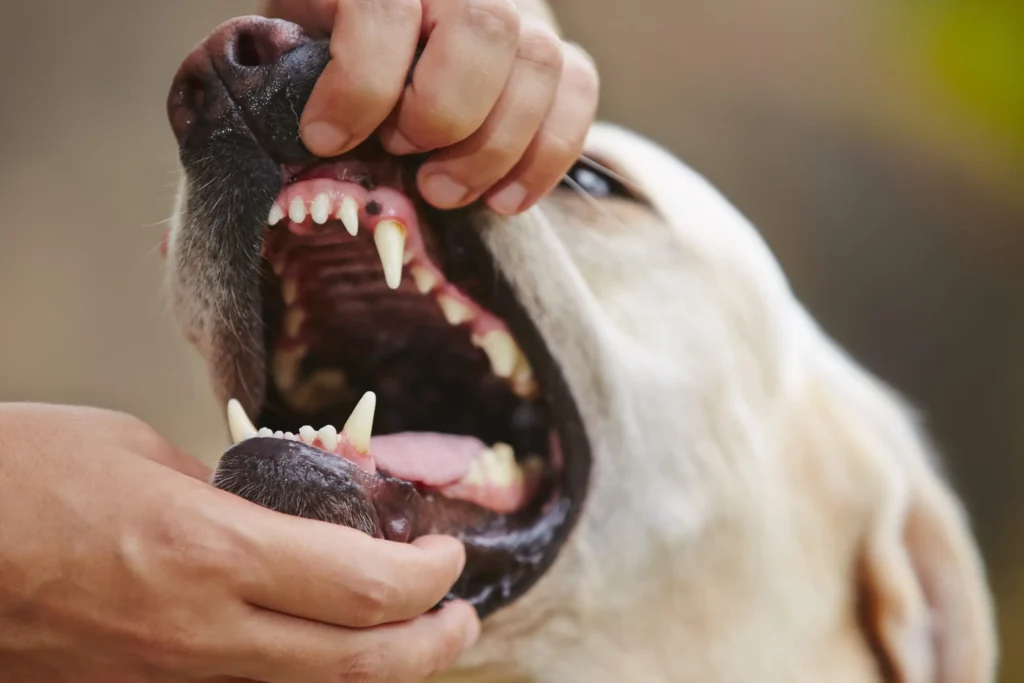
Check your dog’s mouth in bright light. Gently open its jaws and examine gum color, swelling and bleeding. Look for yellow or black tartar, cavities, ulcers, foreign objects inside the mouth and on the tongue. Move slowly and stop immediately if your dog shows pain or resistance.
Remove extremely hard chews and bones temporarily to avoid injuring sore gums and teeth. Note down the odor type, duration, appetite and energy level for later diagnosis. Discourage your dog from picking up garbage or rotten food outdoors to reduce bacterial growth.
5. Oral Issues Linked to Dog Age & Body Condition
Puppies (3 months to 1 year): Puppies go through teething with loose baby teeth and emerging adult teeth. Mild gum swelling and food trapped between teeth cause temporary bad breath. Chewing random objects also leads to foreign body odor. Puppies have healthy tooth roots. Basic cleaning easily resolves mild issues, and severe tartar is rare at this age.
Adult dogs (1 to 7 years old): This is the high-risk period for oral diseases. Dogs fed soft food or wet food without daily brushing develop visible tartar within 6 to 12 months. Overweight dogs with greasy diets and low activity levels often suffer from both bad breath and indigestion, worsening oral odor.
Senior dogs (7 years and older): Aging brings worn teeth, receding gums and exposed tooth roots. Natural self-cleaning ability drops sharply, making tartar and periodontal disease extremely common. Meanwhile, declining organ function leads to frequent liver, kidney and gastrointestinal problems, which are the main causes of stubborn bad breath in senior dogs. Senior dogs have fragile teeth; rough cleaning may cause tooth fracture or gum injury, so care must be extra gentle.
6. Breed Differences in Dental Structure & Disease Risks
Small brachycephalic and companion breeds such as Poodles, Bichon Frises, Pomeranians, Chihuahuas and French Bulldogs have short muzzles and densely arranged teeth. Food gets trapped easily between teeth. These breeds are most prone to tartar and bad breath, and require lifelong consistent oral care.
Medium breeds including Corgis, Shiba Inus and Border Collies have well-spaced teeth and enough room inside the mouth. They chew hard items more often for natural tooth cleaning. Bad breath in these breeds is usually related to diet or stomach issues rather than severe dental disease.
Large breeds like Golden Retrievers, Labrador Retrievers, Samoyeds and German Shepherds have strong, thick teeth and powerful biting force. Regular chewing removes partial tartar naturally. However, their large appetite and meat-heavy diet still lead to tartar buildup on back molars and subsequent bad breath if left unmaintained.
Long-haired and floppy-eared breeds are harder to examine regularly, so early oral lesions are easily overlooked. Breeds that drool heavily have constantly moist mouths, where bacteria reproduce faster and bad breath recurs more easily.
7. How Seasonal & Environmental Changes Affect Oral Health
Spring: Rising temperatures activate bacteria and microorganisms, making mild bad breath much worse. More outdoor activities increase the chance of dogs picking up weeds, garbage and rotten food, which cause foreign body odor and oral inflammation.
Summer: Hot weather may reduce water intake, leaving the mouth dry and food residues stuck firmly on teeth. Spoiled food in summer easily causes gastritis and acid reflux, adding internal bad breath. Increased drooling creates a moist environment for bacterial growth.
Autumn: Dry weather raises the risk of heat stress, swollen gums and mouth ulcers. Decaying ulcer tissue produces a strong rotten smell. Many dogs also have sensitive digestion during seasonal changes, leading to indigestion and bad breath.
Winter: Less outdoor activity means fewer opportunities for natural chewing and tooth cleaning. Closed rooms with poor ventilation and heavy greasy meals for winter nutrition cause food residue and stomach stagnation, resulting in a sharp rise in bad breath cases.
Dirty living areas and uncleaned food bowls also breed bacteria and continuously trigger oral odor.
8. Managing Group Bad Breath & Cross-Contamination in Multi-Dog Households
Harmful oral bacteria and fungi spread through shared bowls, water containers, chew toys and mutual licking. One dog with oral problems can quickly infect all pets in the household. Once group bad breath or red gums appear, provide separate bowls, water dishes and toys for each dog to stop cross-contamination.
Wash, sun-dry and disinfect all pet supplies regularly. Adjust the overall diet by cutting greasy wet food and strong-flavored treats to reduce odor sources.
Classify group symptoms: If most dogs have yellow teeth, tartar and bleeding gums, focus on unified brushing and chewing training. If multiple dogs also have diarrhea, vomiting and low energy, the issue is poor diet or collective digestive trouble, requiring stomach conditioning.
Never share toothbrushes, oral sprays or dental care products. Equip every dog with individual tools. Keep up daily oral maintenance and regular dental checks after recovery to prevent repeated group outbreaks.
9. Full Analysis: Causes & Complete Oral Care Solutions
Based on veterinary diagnosis, severe dog bad breath falls into three major categories: local oral problems, digestive issues and systemic illnesses. Below are detailed symptoms, identification methods and professional solutions.
Cause 1: Dental Plaque & Tartar (Most Common Cause)
Food residues form plaque without regular cleaning. Over time, plaque hardens into tartar, which irritates gums and breeds massive rotten bacteria, creating strong foul odor. Typical signs: Yellow or black crusty tartar on teeth, red gums that bleed easily, rotten bad breath, normal appetite with no vomiting or diarrhea. Solutions: Daily brushing and safe chews improve mild plaque. Hardened tartar cannot be removed at home; visit a vet for professional ultrasonic dental scaling. Maintain daily oral care after scaling to slow tartar regrowth.
Cause 2: Gingivitis, Periodontitis & Mouth Ulcers
Tartar, food scratches, heat stress or wounds lead to inflamed gums and ulcers. Damaged tissue decays and produces odor, while inflammation accelerates bacterial growth. Typical signs: Strong fishy or rotten breath, swollen, protruding and bleeding gums, excessive drooling, pain while chewing, visible white or red ulcers inside the mouth. Solutions: Switch to soft, mild food to avoid irritation. Use pet dental spray and pet mouthwash for daily relief. Seek veterinary treatment with oral and oral antibiotics for severe inflammation or large ulcers. Keep gentle oral cleaning throughout recovery.
Cause 3: Teething Residues & Trapped Foreign Objects (Common in Puppies)
Retained baby teeth, food stuck between teeth, grass thorns or small debris trapped in the mouth cause decaying odor during the teething period. Typical signs: Temporary bad breath in puppies, loose baby teeth and visible food bits between teeth, occasional pawing at the mouth, normal energy and appetite. Solutions: Use soft brushes or dental wipes to clean residues. Have a vet extract stubborn retained baby teeth if they block adult teeth growth. Supervise outdoor activities to prevent foreign objects from entering the mouth.
Cause 4: Poor Diet & Digestive Indigestion (Sour-Smelling Breath)
Greasy food, wet food, strong-flavored snacks, spoiled meals, overeating and slow gut movement cause food stagnation and acid reflux. Stomach odor travels up to the mouth. Typical signs: Sour breath, belching, bloating, loose stool and picky eating; teeth and gums show no obvious lesions. Solutions: Adjust diet by feeding high-quality dry kibble and reducing greasy food and treats. Follow regular portioned mealtimes. Add pet probiotics to improve digestion and increase daily exercise.
Cause 5: Oral Foreign Bodies, Cavities & Tooth Abscesses
Bone fragments, plastic pieces, thorns, decayed teeth and infected tooth roots cause persistent terrible odor. Typical signs: Strong odor mainly from one side of the mouth, frequent head shaking and pawing at the mouth, refusal to chew on the affected side, and slight facial swelling in serious cases. Solutions: Carefully remove visible shallow foreign objects. Visit a vet immediately for deep objects, cavities or abscesses for professional treatment, tooth extraction or root canal therapy if needed.
Cause 6: Systemic Organ Diseases (Stubborn Bad Breath, Common in Senior Dogs)
Liver disease, kidney disease, diabetes and endocrine disorders change body metabolism. Unique metabolic odors are released through breathing. Simple oral cleaning cannot solve the problem. Typical signs: Bad breath returns quickly after brushing or scaling; accompanied by low energy, excessive drinking and urination, weight loss and dull coat; no large-area tartar on teeth. Solutions: Arrange full blood tests and biochemical exams at the veterinary clinic to diagnose the underlying disease. Follow targeted medical treatment while using oral care products to relieve odor.
Step-by-Step Daily Oral Care Routine
Step 1: Desensitization Training (Get Your Dog Used to Mouth Touch)
Do not start brushing forcibly. Gently touch your dog’s lips and gums for 1–2 minutes daily with treat rewards. Continue for 3 to 7 days to eliminate resistance.
Step 2: Basic Daily Cleaning
Use pet toothpaste together with a soft pet toothbrush or finger brush. Brush upper and lower teeth, focusing on back molars. Brush once a day after dinner. Never use human toothpaste. If daily brushing is difficult, use dental wipes or cotton pads to wipe tooth surfaces and reduce plaque.
Step 3: Auxiliary Dental Care
Provide safe dental chews and chew sticks regularly for natural friction cleaning. Use pet mouthwash or dental spray 2 to 3 times per week to suppress bacteria.
Step 4: Regular Professional Checkups
Healthy adult dogs need a full oral checkup every 6 to 12 months. Small breeds and senior dogs require checks every 6 months. Receive ultrasonic scaling promptly once tartar develops.
General Daily Prevention Plan
- Balanced diet: Prioritize high-quality dry kibble; limit greasy wet food, human meals and strong-flavored snacks.
- Build cleaning habits: Start mouth training from 3 months old and keep consistent daily cleaning.
- Natural chewing: Offer safe chew items to reduce tartar through friction.
- Adequate water: Keep fresh water available all day to wash food residues.
- Behavior control: Stop dogs from picking up garbage, rotten food and sharp objects outdoors.
- Senior health checks: Combine annual full-body exams with oral checks for senior dogs.
- Sanitize supplies: Wash and disinfect food and water bowls weekly to avoid bacterial reinfection.
10. Frequently Asked Questions About Dog Dental Care
Q: My dog has mild bad breath but clean-looking teeth. Is brushing necessary?
A: Yes. Early plaque is invisible to the naked eye. Regular cleaning prevents tartar formation.
Q: Can I use human toothpaste or mouthwash for my dog?
A: Absolutely not. Human toothpaste causes poisoning if swallowed. Regular mouthwash irritates dog oral tissue. Always choose pet-specific products.
Q: Can I scrape hard tartar off at home?
A: Not recommended. Improper scraping hurts gums and enamel or breaks teeth. Professional ultrasonic scaling at a vet clinic is the safest solution.
Q: My dog has sour breath with healthy teeth. What is the cause?
A: It is usually indigestion and food stagnation. Adjust diet, add probiotics and increase exercise for improvement.
Q: Why does bad breath remain even with daily brushing?
A: Check for hidden deep tartar that needs professional scaling, or examine liver, kidney and digestive health for internal issues.
Q: Do puppies need medication for teething bad breath?
A: Most cases are normal. Clean food residues and provide enough water. Use medication only if gums are swollen or pus appears.
Q: Can dental treats and chews replace toothbrushing?
A: No. They only clean outer tooth surfaces and cannot remove debris between teeth or along gum lines. Use them only as supplementary care.